Middlemen
Now or Never, coming Fall 2026
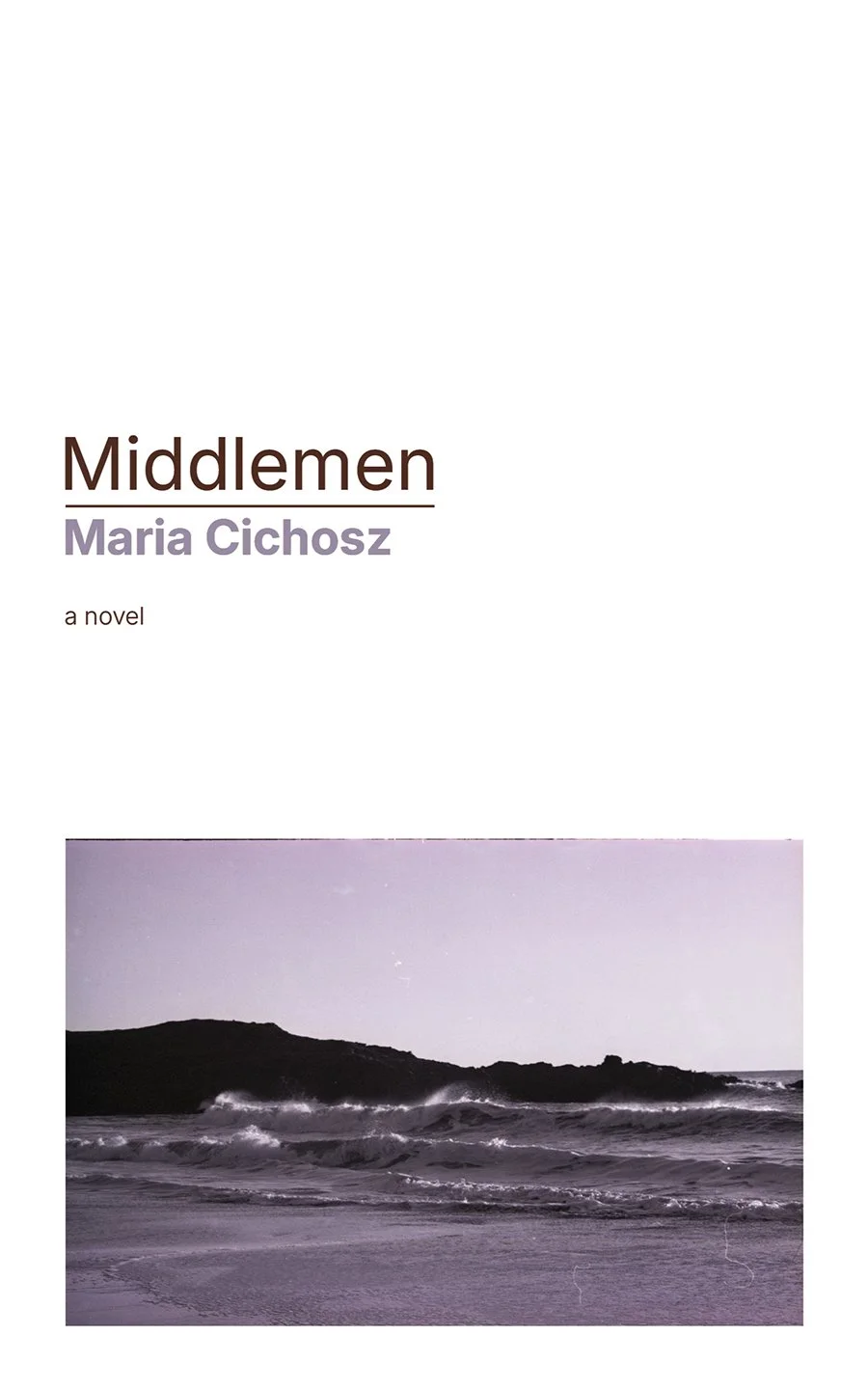
Toronto, mid-2010s: the economy is tanking, the opioid crisis is about to explode, and Beau Larky is drifting through the city in a drug-fuelled haze, photographing extravagant weddings in order to bankroll his habit. When he learns that Cam, his former roommate and one-time lover—now a celebrity academic on the West Coast—has suffered a breakdown, Beau is seized by an unexpected need to see him after years of silence. His impulsive trip to California ignites the resentment of Stacey, the professor’s soon-to-be wife, and Cliff, their former drug dealer turned real-estate shark, now too busy riding the housing boom to care about anything but the market.
To “middle” is to sell drugs to support one’s own habit, but also to linger, to stall, to refuse to decide. Middlemen is a dark, unflinching story about class, distance, addiction, and the blurry line between human and financial relationships. Above all, it is a break-up letter to Toronto, the novel’s meanest character.


Cam & Beau
Now or Never, 2020
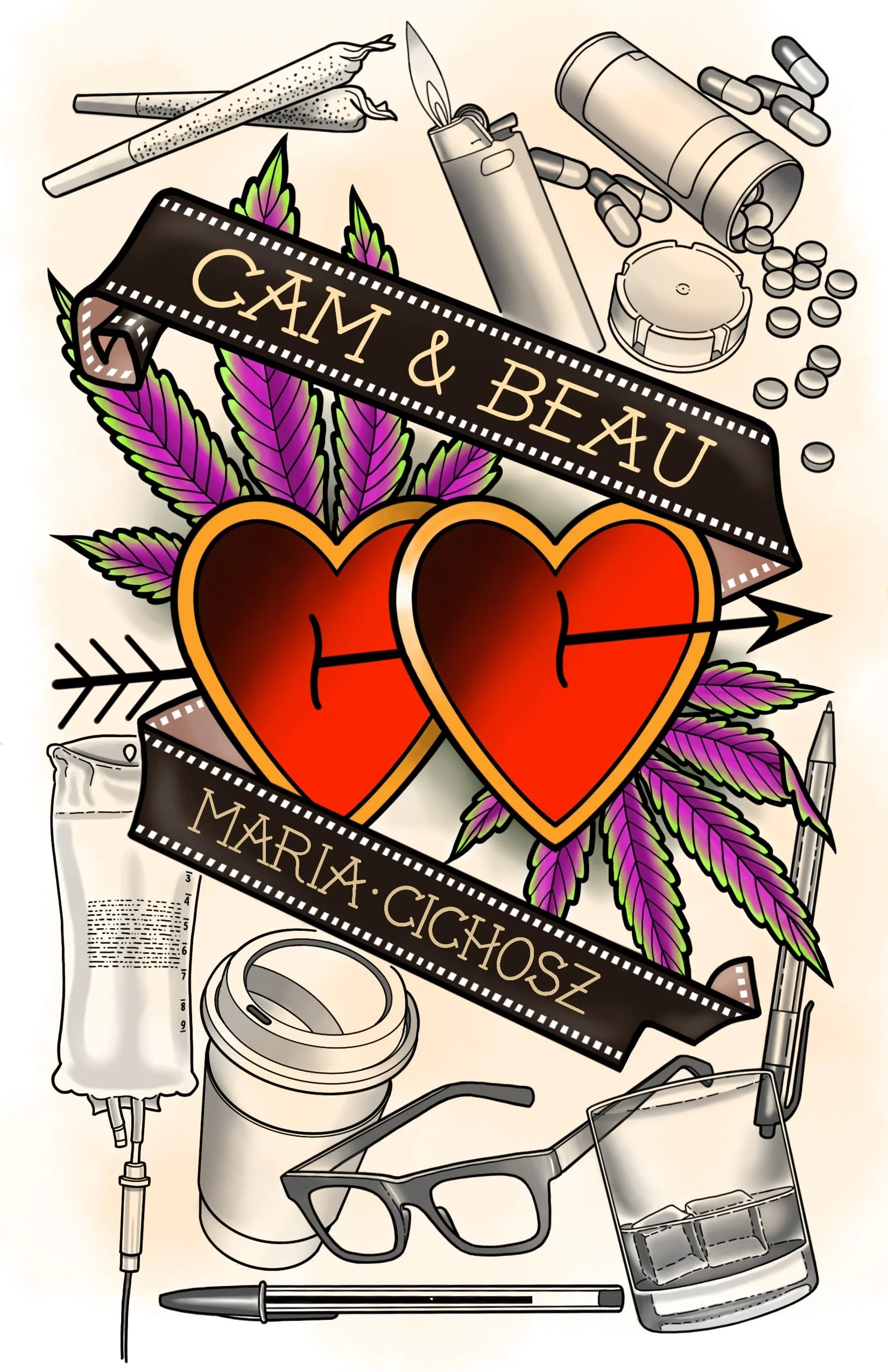
Cam and Beau are best friends, roommates, and massive potheads. Life is sweet, except for one crucial thing: Cam will never get up the nerve to tell Beau Larky he’s in love with him. Cam is a man of thought, not action, and would rather linger in doubt than risk losing the friendship. That is, until the mysterious and unwelcome involvement of a mutual friend with an unshakable conviction that Beau reciprocates Cam’s feeling and needs to be told the truth. Equal parts gonzo bromance and melancholy longing, Cam & Beau is a novel about unspoken knowledge between people, the parameters of seeing and not seeing, and what happens when familiar things are made strange.



Press for Cam & Beau


"An emotional journey that crackles with electricity, wielding the seductive power of a gripping, page-turner thriller. This is a must-read: a wry, sincere and unforgettable voice with strong universal appeal. I couldn't put it down."
-Victoria Hetherington, author of the The Friend Machine
“The writing is lean and fierce, the characters radiant and true, and the storytelling hums at the clip of our times: always down the narrative, where the heart of the tale is in the promise of that next place."
-Dave Bidini, author of On a Cold Road
“THANKS FOR MAKING ME CRY AT WORK LIKE A LIL BABY”
-Bailey Gardner, avid reader
Ask the Author: Cam & Beau
1
What inspired you to write this story?
Cam & Beau was written between 2010 and 2013 while I was very young and dead broke and high on living in my hometown, Toronto. It’s the first truly long thing I ever wrote, and probably the closest I’ll ever get to genuine magic. It’s not like I sat down and said, I want to write about a, b, and c. These characters came to me loud and fully formed, and I wanted to do right by them by realizing their world. I wrote this book because it’s a story I’ve always wanted to read, which is a very pure thing, in hindsight. I was just cutting my teeth as a writer and had no formal instruction—I just did what felt right. In that way, the experience of youth is central to the story and the pace and immediacy of its narrative style. When you’re new to the world everything feels so much more intense. When things are bad, they’re not just bad—they’re dire, overwhelming, final. The flipside is that for young people the experience of living is also immediate, pure, and profound in a way it can’t be for most adults. These paradoxical extremes are cemented into the story for me. On one hand, living in Toronto in the aftermath of the 2008 recession was frightening and precarious and out of control because there were no jobs and money was a constant problem and it was hard to imagine a future. Yet it was also invigorating and eye-opening and joyous, because I was surrounded by a wonderful community and the city felt so alive and full of potential despite all that. This book became a snapshot of that crazy golden time in a way I never could have anticipated.
Grunge and drug culture feature heavily in Cam & Beau, which is set in Recession Era Toronto, and in many ways feels nostalgic in this current day of legalized marijuana and evolved opinions around recreational drug use. How do you think this nostalgic factor affects the narrative in Cam & Beau? Would the story have been very different if set in any other time?
2
For me, this story is inseparable from its setting. It’s easy to forget that pot wasn’t always as mainstream as it is now—it was gross and illicit and plagued with stereotypes, something that you could be arrested for and had to sneak around with. At the same time, the period the novel is set in was a golden age for street drugs because no one had yet heard of fentanyl and it was still possible to enjoy synthetic powders with relative safety and freedom, which is unthinkable in the age of North America’s opioid epidemic. Reading back through some of the crazier drug scenes in the novel was enough to make me want to send everyone involved a pamphlet about harm reduction, which gives you a sense of how different that context was. It’s also easy to forget that the gentrified, clean, condo-strewn Toronto with the grossly inflated housing market and impossible cost of living we know today was once (and not that long ago) a grungy, humid, trash-scented, working class city where it was possible to rent a one-bedroom apartment for seven hundred dollars a month. Those days are over, and that city is gone. During the Great Recession, you could almost feel the current shifting. Cam & Beau is a love letter to the city of Toronto as it was in that time, on the cusp of irrevocable change, much like the characters themselves.
This book was always intended as an exploration of the tired cliché that love is a drug. You hear that all the time in pop songs—you can’t stop thinking about the one you love, you crave their presence, they give you a euphoric rush—but what does that really mean? Love and drugs are two forms of intense experience along a spectrum of intoxication, and they’re both states in which it feels like something external and irrational has taken hold of you. Both love and drugs make it difficult to tell the difference between pleasure and pain, where one ends and the other begins. It’s always fascinated me that a single experience can be the source of such extremes—euphoria on one end, addiction on the other. Neuroscientists make much of the fact that passionate love stimulates the same brain centers as addiction and releases the same chemicals: oxytocin, endorphins, and dopamine. I wanted to explore how behavior we consider deviant and specific, like addiction, is actually common to an entire realm of human experience and raises a series of questions about compulsion, freedom, willpower, and agency. I wanted to flesh out that idea by dramatizing the parallel between love and drugs as literally as possible.
Throughout the novel, it at times feels like Cam’s affection for Beau is actually an extension of his addictive behavior—was this an intentional parallelism or something that emerged throughout your writing process?
3
We all love a little angst, but Cam & Beau practically explodes with it. Can you speak a bit to the dynamics between Cam and Beau as characters, and what their relationship says about love and attraction to you (especially in a world that is quick to want to make it pretty and linear?)
4
The short answer to this question is that I grew up listening to a lot of emo, and now something of that anguished, over-the-top sensibility will always colour my work. If this novel were an album it would be a raw, lo-fi, sentimental cassette tape made on a four-track machine in a basement with a healthy dose of screaming.
The long answer is that while we’re used to thinking about fiction as something that should mirror social reality as closely as possible, I think the remarkable thing about art is that it’s a space of extremes. Art can exaggerate life to help us better see its truths. I love grand gestures and dramatic confrontations and dire stakes in fiction because I think these are a drastic attempt at sincere expression beyond what ordinary speech can convey. Cam & Beau is about the gap between feeling and expression, and why it’s so hard to fully and sincerely express ourselves. Much of the angst in the book is not just the specific angst of Cam and Beau’s situation, but the angst of the inevitable impossibility of ever fully saying what we mean, whether in love or in art, and the necessity of trying anyway. Cam is always thinking about acting on his feelings, but he always stops himself just short of doing it. Beau is constantly working overtime to keep himself from seeing what’s right in front of him because he’s afraid of how it might change him. In other words, they’re both struggling with the consciousness of their own freedom. The deadlock between the knowledge that you could act and the fear that prevents you from doing so is angst, in the existential sense, so it’s no wonder their dynamic drips with it. The process of working through that stalemate is the messy, difficult labour of negotiation that undergirds any meaningful relationship or pursuit. Mainstream relationship narratives want to skip that preamble to get to the story, but in my view, that process is the story.
You balance the gravity of Cam and Beau’s emotions with levity and humour––and your publisher writes that the novel is equal parts “gonzo bromance” and melancholy. Could you speak a little more to the lighter side of this novel (and why you wanted to inject it with hijinks and amusement?)
5
One of my favourite film genres is the stoner comedy, which flourished in the mid-2000s and early 2010s and overlaps with the book’s temporal setting. I love that over-the-top, goofy situational slapstick humour of ordinary everyday tasks turning into ridiculous shenanigans when illicit substances become involved. The stoner comedy is also always a buddy movie, with friends having to embark on a pot-addled quest together. Like classic gonzo writing, it’s driven by larger-than-life personalities and drug-fueled adventure. Cam & Beau has all these elements because I always wanted its pretty grave storyline to be balanced by a playful dialogue with these non-literary genres. Drugs are always an unknown variable. Once they’re introduced, anything can happen, and often it does. There’s a carnivalesque fun and disorder to drug-inspired situations in the sense that the quotidian world and social norms get turned upside down. Cliff, Cam and Beau’s drug dealer, is always trying to get everyone to take drugs because he takes pleasure in the way they set things in motion and move the plot in unexpected ways. I had a lot of fun writing the book’s drug scenes. When you’re writing something with so much angst, you have to consider the reader’s threshold for pain and break it up with something less intense, a kind of pressure-release value. This would have been a much darker and less compelling story if it wasn’t for the stoner slapstick.
What other themes and ideas did you attempt to explore with the novel? How has your research and study of allegory affected this novel?
6
Academia has given me a healthy respect for the inadequacy of words to the things they try to describe. There is a lot of theory in this book, and Cam is always trying to reconcile the theory he reads with the undeniable vividness of his feelings and beliefs. He knows that language is a source of power and that words are never just words, because can they make things happen in the world. At the same time, he constantly experiences the failure of language to convey the things he wants to say. Allegory is a mode of expression in which you say or show one thing but actually mean something else. You could say that in allegory there’s a gap between what’s said and what’s meant, and this novel is a dramatization of that condition. At one point Beau reflects that Cam is “full of things that mean something other and more than what he says.” For me, Cam embodies the essence of allegory—he’s an allegorical character. These doubts about language and meaning and how closely words can touch the texture of reality are questions I first explored through theory that ultimately found their way into the book.